Hidden costs to avoid with Westminster rubbish removal

Posted on 11/08/2026

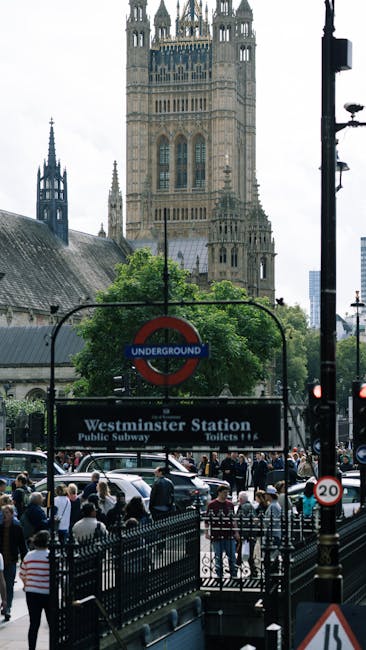
A London Underground station sign featuring a red circle with a blue horizontal bar displaying the word 'UNDERGROUND' in white text, mounted on a decorative wrought iron bracket attached to a historic building with ornate stonework. Behind the sign, part of a Union Jack flag is visible, draped next to the sign. The scene is viewed through black iron railings with pointed finials in the foreground, suggesting an urban outdoor setting near a Westminster street. The building's facade is light-colored stone, with detailed architectural elements and multiple windows, indicating a typical cityscape environment. The background sky appears overcast, providing diffuse natural lighting that highlights the textures of the stone and metal. This scene reflects a typical Westminster environment, often associated with central London’s transport infrastructure and historic architecture, relevant to discussions on transportation hubs and city infrastructure in the context of waste management and disposal services like those provided by Westminster rubbish removal experts.

If you have ever booked rubbish clearance and felt that slight sting when the final bill arrived, you will know why hidden costs to avoid with Westminster rubbish removal matter so much. Westminster is not a place where you want avoidable surprises: access can be tight, parking can be awkward, and waste jobs often need a bit more planning than the glossy quote suggests. The good news? Most of the sneaky extra charges are predictable once you know where to look.

This guide breaks down the real-world traps, the questions worth asking before you book, and the practical steps that help keep a clearance simple, fair, and properly costed. No fluff. Just the stuff that saves you money and stress.

A London Underground station sign featuring a red circle with a blue horizontal bar displaying the word 'UNDERGROUND' in white text, mounted on a decorative wrought iron bracket attached to a historic building with ornate stonework. Behind the sign, part of a Union Jack flag is visible, draped next to the sign. The scene is viewed through black iron railings with pointed finials in the foreground, suggesting an urban outdoor setting near a Westminster street. The building's facade is light-colored stone, with detailed architectural elements and multiple windows, indicating a typical cityscape environment. The background sky appears overcast, providing diffuse natural lighting that highlights the textures of the stone and metal. This scene reflects a typical Westminster environment, often associated with central London’s transport infrastructure and historic architecture, relevant to discussions on transportation hubs and city infrastructure in the context of waste management and disposal services like those provided by Westminster rubbish removal experts.

Why Hidden costs to avoid with Westminster rubbish removal Matters

Rubbish removal looks simple from the outside. You have waste, someone comes, it disappears. Nice and tidy. But in Westminster, the price can change quickly if the job is not scoped properly. A narrow mews, a basement flat, a top-floor office, a controlled parking zone, or mixed waste that includes bulky items can all shift the cost in ways that are easy to miss at first glance.

That is why the phrase hidden costs is not just a warning label. It is a practical issue. A low headline price can be perfectly real, yet still omit the details that make the actual bill much higher. Think of it as a menu with no sides, no delivery fee, and no note about the stairs. Not ideal.

For households, the risk is paying more than you expected for a house clearance, garden waste job, or one-off collection. For landlords, agents, and local businesses, the risk is disruption, wasted time, and awkward conversations when the skip-sized problem turns out to need more labour than planned. If you are comparing options, it helps to look at the full picture alongside the wider service overview and the provider's pricing and quotes information.

One simple truth: the cheapest quote is not always the cheapest job.

How Hidden costs to avoid with Westminster rubbish removal Works

Most rubbish removal pricing is built from a few moving parts. The core cost usually reflects volume, type of waste, labour required, and access. Then the extras begin creeping in. Sometimes fairly. Sometimes not so fairly. And sometimes simply because the customer did not know to ask.

Here is the usual pattern. A company gives a starting quote based on what you describe. If the load is exactly as described, the job goes smoothly. If the waste turns out to be heavier, harder to carry, mixed with prohibited items, or located somewhere awkward, the price can rise. The issue is not that adjustments are always wrong. The issue is when they are not made clear before anyone turns up.

In practical terms, the most common hidden costs fall into these buckets:

  • Access charges for stairs, long carries, basement collections, or no-lift buildings.
  • Parking or waiting time if the crew must circle for a space or wait for access.
  • Extra labour where the job takes more people or more time than first estimated.
  • Waste type uplifts for heavier materials, builders' debris, or mixed loads.
  • Minimum-load pricing where small jobs still sit above a baseline fee.
  • Item-specific charges for mattresses, fridges, white goods, or awkward bulk items.
  • Disposal or recycling fees where the provider passes through charges linked to waste handling.

If you are clearing a property after a move, renovation, or office change, it is worth browsing relevant service pages such as house clearance in Westminster, office clearance support, or builders waste disposal in Westminster so you understand which service actually fits the waste stream. Mixing the wrong job type into the wrong quote is where a lot of people get caught out.

Key Benefits and Practical Advantages

When you know how hidden charges appear, you make better decisions straight away. The benefits are not abstract; they show up in your bank balance, your schedule, and your stress levels.

  • Better budgeting: You can compare true total cost rather than just the headline price.
  • Fewer delays: Jobs are less likely to stall because access or lifting requirements were misunderstood.
  • Cleaner communication: You and the removal team know what to expect before anyone arrives.
  • Better value: A properly scoped job often works out cheaper than a bargain quote with add-ons.
  • Less disruption: This matters especially in Westminster, where parking, neighbours, and building access can be tricky.

There is also a trust benefit. A transparent quote tells you a lot about how a company operates. A provider that explains what is included, what is not, and what might change later is usually easier to deal with if plans shift. That is a decent sign in any service business, and rubbish removal is no exception.

If sustainability matters to you, it is also worth checking how waste is handled after collection. A clear approach to sorting, recycling, and disposal can be found on the site's recycling and sustainability page. That does not magically make a quote cheaper, but it often makes the whole service more sensible.

Who This Is For and When It Makes Sense

This guide is for anyone in Westminster who wants to avoid overpaying for waste removal. That includes homeowners, tenants, landlords, letting agents, office managers, shop owners, tradespeople, and anyone dealing with a pile of stuff that is becoming a problem rather than a project.

It makes particular sense if you are in one of these situations:

  • Clearing a flat after a move, tenancy end, or refurbishment.
  • Getting rid of garden waste after a tidy-up.
  • Removing builders' rubble, timber, plasterboard, or mixed renovation waste.
  • Emptying an office before a fit-out, relocation, or closure.
  • Managing bulky furniture or white goods that need manual handling.

Westminster's property stock can be wonderfully varied. That is part of the charm, and part of the headache. A townhouse job can look easy until you meet the stairs. A modern office can be straightforward until the loading bay access changes at short notice. Even a small job can become awkward if the van cannot stop nearby. If you have ever stood at a window watching someone hunt for a parking space in the rain, you will understand the mood instantly.

For property owners and buyers looking at the area, related reading like buying houses in Westminster or whether Westminster is a suitable place to call home can also help you think about day-to-day practicalities, not just the postcode prestige.

Step-by-Step Guidance

If you want to avoid hidden costs, the process starts before booking. A few careful steps can save a surprising amount of money.

  1. List everything you need removed. Be specific. "Old furniture" is less useful than "three wardrobes, a sofa, two mattresses, and a desk."
  2. Describe access honestly. Mention stairs, basements, lift access, loading restrictions, parking limitations, and distance from the property to the vehicle.
  3. Separate waste types if you can. Mixed loads can be more expensive than clean, sorted waste.
  4. Ask what is included in the quote. Labour, loading, disposal, recycling, parking, and any VAT or admin charges should be crystal clear.
  5. Confirm how price changes are handled. If the team finds more waste on arrival, what happens next? Ask for the process, not just the number.
  6. Check timing and waiting rules. If access is delayed, will waiting time be charged?
  7. Get the final confirmation in writing. A message or email is often enough. It avoids the awkward "I thought you said..." moment later on.

In our experience, the smoothest jobs are the ones where the customer shares a few photos in advance. It sounds simple, almost too simple, but pictures of the waste and the access route can cut out a lot of guesswork. A hallway photo tells you more than a vague description ever will.

If you are planning a larger clearance, comparing the right service pages can help you avoid paying for the wrong kind of collection. For example, a garden tidy-up is better matched with garden waste removal Westminster, while everyday mixed rubbish may sit better under rubbish collection in Westminster.

Expert Tips for Better Results

Here is where a little local know-how pays off. Westminster jobs are not difficult, but they are rarely frictionless. Small details make a big difference.

  • Measure bulky items before collection day. A sofa that needs twisting round a corner can cost time, and time costs money.
  • Check for restricted access windows. Some buildings, especially offices and managed blocks, have strict loading or lift booking rules.
  • Be honest about heavy waste. Soil, tiles, rubble, and dense materials are not the same as light household clutter.
  • Ask whether the crew can handle dismantling. Some providers remove items as-is; others will break them down. That can affect price.
  • Keep a little buffer in your budget. Not because you expect the worst, just because real jobs do not always match neat assumptions.

A small aside: if a quote sounds almost suspiciously cheap, there is usually a reason. It might be perfectly genuine. It might also be missing the ugly bits. The point is not to distrust everyone. The point is to ask one more question than you think you need.

For credibility and peace of mind, it also helps to understand how a provider approaches business conduct. Pages such as insurance and safety, payment and security, and about us give you a better sense of how carefully a company works behind the scenes.

A city street scene with historical architecture on either side, featuring tall, ornate buildings with detailed stone facades and large windows. In the background, the Elizabeth Tower known as Big Ben, with its distinctive clock face and spire, is visible over leafless trees and a clear blue sky. The street is lined with black bollards and lampposts, with a few pedestrians walking along the pavement. A white van is parked near the curb, and a group of people are seen near the sidewalk, some wearing coats. The environment appears to be in winter or early spring, with the atmosphere bright but cool. This urban scene reflects a typical central Westminster setting, where external buildings and infrastructure are visible, and occasional private waste collection or external rubbish clearance might be part of maintaining the area's aesthetic, supported by professional waste removal services like those provided by Westminster rubbish removal specialists.

Common Mistakes to Avoid

Most extra costs come from very ordinary mistakes. Nothing dramatic. Just small gaps in information that snowball at the wrong moment.

  • Booking on headline price alone. A bargain quote is not a bargain if it excludes labour or access.
  • Guessing waste volume. People are often wildly off here. Not maliciously. Just optimistically.
  • Forgetting about parking. In Westminster, this can be a major factor, not a side note.
  • Mixing prohibited items with standard waste. That can trigger extra handling or a revised price.
  • Not mentioning stairs or long carries. Crews need to know if the route from property to vehicle is straightforward.
  • Leaving out late changes. If you add another room's worth of clutter after booking, tell the provider before they arrive.

A common one is the "It's only a few bags" problem. A few bags can be fine. Then there are the bags behind the chair. And the ones in the cupboard. And the half-assembled shelving unit you forgot about. Suddenly the job is not "a few bags" at all.

Another mistake is assuming all rubbish removal is basically the same. It really is not. A small domestic pickup, a builders' clearance, and an office strip-out have different cost drivers. Choosing the right category matters.

Tools, Resources and Recommendations

You do not need complicated software to avoid hidden charges. A few simple tools and habits are enough.

  • Phone photos: Take pictures of the waste, the route out, and any access constraints.
  • Basic measurements: Width of hallways, stair turns, and item sizes can be surprisingly useful.
  • Short written inventory: A list of items is much better than trying to remember everything later.
  • Calendar notes: Record access times, parking restrictions, and any building rules.
  • Provider information pages: Use the site's service overview and pricing and quotes pages to understand how quotes are structured.

There are also a few pages that support informed decision-making in a broader sense. If you are weighing disposal options for a larger project, waste removal services in Westminster may be a better fit than a quick one-off collection. And if you want to understand the business approach more generally, the site's terms and conditions can be helpful reading before you commit.

Truth be told, the simplest resource is your own good notes. The better you brief the job, the less room there is for surprises.

Law, Compliance, Standards, or Best Practice

For waste services, compliance matters. You do not need to become an expert in UK waste law to book a clearance, but you should expect any reputable provider to work responsibly and to handle waste in line with accepted legal and environmental practice.

At a practical level, that means waste should be carried, sorted, transported, and disposed of properly. It should not be fly-tipped, and it should not be treated as if every item has the same handling requirements. If a company is vague about disposal methods, that is a red flag. Not always a deal-breaker, but definitely worth a second look.

Best practice also includes clear pricing, proper insurance, and honest communication about what the team can and cannot take. If a provider seems reluctant to explain charging structure, ask again. A transparent business should be able to explain its process in plain English.

Some jobs need additional care. For example, bulky waste, sharp materials, or heavy renovation debris can increase manual handling risk. That is why the provider's safety procedures matter as much as the price. You are not just paying for a van; you are paying for a process that should keep people and property safe.

It is also sensible to review how a company handles privacy and payment information. On this site, that context is covered in the privacy policy, payment and security, and insurance and safety pages.

Options, Methods, or Comparison Table

Different waste jobs suit different approaches. The right method depends on volume, access, timing, and how mixed the waste is. Here is a simple comparison to help you think clearly.

Method Best for Possible hidden cost risk What to check
One-off rubbish collection Small to medium household or mixed waste Minimum charge, access fees, item uplifts What is included in labour and disposal
House clearance Full or partial property clearances Extra rooms, stair access, sorting time Whether all items are counted in the quote
Office clearance Desks, chairs, filing, and workstations Lift bookings, access windows, multi-floor labour Building rules and timing restrictions
Builders' waste disposal Renovation debris and construction leftovers Weight-based uplifts, mixed waste charges Whether rubble, timber, and plasterboard are separated
Garden waste removal Green waste, branches, soil, and clippings Heavy-load costs, bagging and loading time Whether the waste is green-only or mixed

If you are unsure which route is best, start with the service that matches the waste rather than the one that sounds cheapest. That small change often saves money.

Case Study or Real-World Example

Here is a realistic example. A couple in Westminster were clearing a flat after a refurbishment. They expected a quick collection of boxes, a broken wardrobe, a bathroom cabinet, and a few bags of mixed waste. The initial quote looked reasonable, but the building access was tighter than they first described. The lift was too small for one item, parking was limited, and the wardrobe needed dismantling on site.

The final cost rose because the job took longer and required more labour. Nothing outrageous, but enough to be annoying. The thing that made the difference was not the price itself; it was the lack of detail before booking. Had they sent photos of the stairs, the wardrobe, and the parking setup, the estimate would probably have been closer from the start.

In the end, the lesson was simple. Quote accuracy improves when the provider has real information, not hopeful information. It sounds obvious, but when you are trying to get a place cleared and move on with your day, obvious things are easy to miss.

That same thinking helps with bigger local decisions too. People exploring Westminster as a place to live or invest often look at practicalities first, which is sensible. Nearby reading like investing in Westminster real estate or taking a stroll through historic Westminster can offer useful context around how the area functions day to day.

Practical Checklist

Use this checklist before you confirm any rubbish removal booking in Westminster.

  • Have I listed every item to be removed?
  • Have I described access honestly, including stairs and lift use?
  • Have I mentioned parking limits or loading restrictions?
  • Do I know whether the quote includes labour, disposal, and recycling?
  • Have I asked about minimum charges or item-specific fees?
  • Do I know what happens if the waste volume is higher on the day?
  • Have I separated any special or heavy materials where possible?
  • Am I clear on timing, waiting, and any possible access delays?
  • Have I checked the provider's safety, payment, and policy information?
  • Do I have the final quote or summary in writing?

If you can tick most of those off, you are already ahead of the game. Seriously. Most people do not.

Conclusion

The hidden costs to avoid with Westminster rubbish removal are usually not mysterious at all. They are the ordinary extras that appear when access, waste type, labour, or timing were not fully explained from the beginning. Once you know what to ask, the whole process becomes much easier to manage.

The smartest approach is simple: be specific, ask for written clarity, and choose the service that actually fits the job. That way you protect your budget, reduce hassle, and avoid the classic last-minute "oh, there's an extra charge for that" moment. Nobody enjoys that. Not really.

If you are comparing providers or planning a clearance soon, take the time to review the service pages, read the policy information, and make sure the quote reflects the actual job in front of you. A careful booking now usually means a calmer day later.

Get a free quote today and see how much you can save.

And if you do nothing else, remember this: a clear quote is worth more than a cheap one. Peace of mind has value too.
A London Underground station sign featuring a red circle with a blue horizontal bar displaying the word 'UNDERGROUND' in white text, mounted on a decorative wrought iron bracket attached to a historic building with ornate stonework. Behind the sign, part of a Union Jack flag is visible, draped next to the sign. The scene is viewed through black iron railings with pointed finials in the foreground, suggesting an urban outdoor setting near a Westminster street. The building's facade is light-colored stone, with detailed architectural elements and multiple windows, indicating a typical cityscape environment. The background sky appears overcast, providing diffuse natural lighting that highlights the textures of the stone and metal. This scene reflects a typical Westminster environment, often associated with central London’s transport infrastructure and historic architecture, relevant to discussions on transportation hubs and city infrastructure in the context of waste management and disposal services like those provided by Westminster rubbish removal experts.


Rubbish Collection in Westminster

Rubbish Collection Westminster provides rubbish collection in Westminster for homes, flats, offices and managed properties that need waste removed in a practical, organised way. The service can cover mixed household rubbish, bulky items, light builder’s waste and general clearances, with the work shaped around access, volume and the type of materials involved. Where sorting matters, we separate reusable, recyclable and residual waste as part of a straightforward collection process.

For many customers, the main value is having one team deal with loading, transport and disposal rather than trying to handle it in stages. We work across planned clearances and one-off collections, and our service pages outline the main options in more detail, including waste removal in Westminster and our services overview. If you are comparing different kinds of clearance, it can help to think first about the waste type, the access route and whether anything needs to be separated before collection.

To start, request a quotation with a brief description of what needs removing and where it is located. If you already know the main items, that is often enough to begin a useful estimate. For a broader view of costs, you can also review the information on prices and pricing and quotes.

Household Rubbish Collection and Clearances

Domestic rubbish collection often includes items that are awkward to place in ordinary bins, such as broken furniture, bagged clutter, unwanted appliances and stored contents from rooms, cupboards or loft spaces. The aim is to clear the load efficiently while keeping the process orderly, especially where items need to be carried through shared entrances, narrow stairs or communal areas. Our house-related collection page explains this service area further at house clearance in Westminster.

When a household clear-out has several types of rubbish mixed together, it is usually best to identify the bulky pieces first and then note any materials that may need separate handling. That gives a clearer picture of the work involved and helps avoid surprises on the day. A short list can be useful:

  • large furniture and furnishings
  • bagged general rubbish
  • small broken household items
  • light recyclable materials
If the job includes outdoor waste as well, the collection plan may need a different approach, especially where garden clippings or soil are involved.

About Westminster

Westminster is a central London district with a long civic and political history, shaped by the presence of royal, parliamentary and ecclesiastical institutions. Westminster Abbey, the Palace of Westminster and St James’s Park are among the best-known landmarks, while the surrounding streets combine formal government buildings, hotels, offices and residential pockets. The area sits beside the River Thames and includes stretches of embankment that frame views across the water, adding an open riverside character to an otherwise densely built urban landscape. Historically, Westminster developed as a separate settlement from the City of London, with monastic and royal influences giving it an identity that still shapes its architecture and street pattern. Many buildings are substantial nineteenth- and twentieth-century additions layered around older sites, and the district includes conservation-sensitive streets, squares and institutional estates as well as busy transport corridors. Green spaces such as St James’s Park and nearby Victoria Tower Gardens give the area a sequence of formal open ground, tree planting and ceremonial routes. Cultural life is anchored by museums, theatres, churches and public buildings, while everyday movement is shaped by the concentration of offices, visitors and residents in a compact central setting. As a place, Westminster balances national symbolism with ordinary city life, combining heritage, administration and residential use in a way that is uncommon elsewhere in London.

Garden Waste, Light Green Clearance and Outdoor Materials

Garden waste collection is useful where pruning, hedge cuttings, branches, leaves and other outdoor materials build up faster than normal household disposal can handle. The job may also include old plant pots, damaged timber, worn outdoor furniture and mixed organic waste. The main concern is to keep green waste separate from general rubbish where possible, because that makes loading and disposal more efficient and can simplify the handling of recyclable material. You can see the dedicated page for garden waste removal in Westminster.

Outdoor clearances are often best approached by thinking about what is truly waste, what could be reused, and what may need a different disposal route. If the collection includes compostable material, soil, broken planters or old fencing, it is sensible to mention those items when you ask for a quotation. A small amount of preparation can help the visit run smoothly: keep access clear, group similar items together if possible, and note anything unusually heavy or awkward to move. For properties with limited outside space, this can make the collection more straightforward.

Commercial customers may also need garden waste taken from shared grounds, courtyards or small landscaped areas at offices and managed buildings. In those situations, the work is usually about keeping the area tidy while avoiding disruption to occupants or visitors. Where a site produces different waste streams, it can be useful to separate green waste from packaging, broken fixtures and miscellaneous rubbish before the collection begins.

Office, Business and Managed Property Clearance

Office clearance work is typically about removing desks, chairs, filing items, packaging, IT-related clutter and general business waste without disrupting the building more than necessary. Depending on the location, there may be lifts, loading restrictions, shared corridors or building rules that affect how the clearance is carried out. A clear plan helps with timing, access and the order in which different items are moved. The business-specific page here is office clearance in Westminster.

For larger commercial jobs, the useful questions are usually simple: what needs to go, which items are recyclable, and whether any materials must be handled separately because of their condition or content. Mixed workplace clearances are easier to manage when the main categories are identified in advance. That may include broken office furniture, archive materials, fixtures removed during refits and everyday rubbish left after a move or reorganisation. If the building has limited service access, it is sensible to mention that early so the collection can be planned around it.

Some business customers also use rubbish collection as part of routine space management rather than a one-off move. That can include periodic removal from storage rooms, stock areas, back-of-house spaces or small site offices. In these cases, the work is less about dramatic clear-outs and more about keeping surplus material moving out of the way so the premises remain usable. If you need a quotation for a workplace or managed property, a brief description of access and item type is usually enough to begin.

Builder’s Waste, Renovation Debris and Site Clean-Up

Builder’s waste disposal covers materials left after repairs, alterations and refurbishment work, such as plasterboard, timber offcuts, broken fittings, packaging and general renovation debris. Some loads are straightforward, while others need more care because they contain a mix of heavier and finer materials. The dedicated page for this service is builders waste disposal in Westminster.

When building-related rubbish is involved, it helps to separate the work into the main categories of material rather than treat everything as one pile. Heavier waste, awkward fragments and bagged dust all affect how much labour is involved and how the load should be handled. If you are preparing a quotation request, include the approximate size of the clearance and any items that are likely to be particularly bulky. That gives a better basis for assessment than a vague description of “building waste”.

For some renovation projects, the waste is generated in stages, not all at once. A collection service can then support the project by taking away accumulations after different phases of work, such as demolition, strip-out or final fit-out. That is especially useful where a property needs to remain safe and reasonably tidy during the work. We can also discuss mixed loads where the rubbish is not purely construction material but includes old fixtures, packaging and general debris.

Pricing, Quotes and How to Prepare

Pricing usually depends on the amount of waste, the type of material, how easy it is to load and any extra handling required for heavier or more awkward items. A clear quotation is easier to prepare when the collection can be matched to a recognisable category, such as household rubbish, garden waste, office contents or builder’s debris. If you would like to compare the broad approach first, the pages on prices and pricing and quotes explain the main starting points.

Two simple details often help the most: what needs collecting, and where it is in the property. If access is tight, if items are spread across several rooms, or if there are fragile surroundings to protect, those points are worth mentioning. Photographs can also be useful where the load is mixed or difficult to describe, although a written list is still helpful. If the collection is urgent in planning terms rather than in timing terms, say so in your enquiry so the work can be scheduled with that in mind.

For customers comparing options, the most useful decision is usually whether the job is best treated as a single clearance or as a sequence of smaller collections. That depends on storage space, access and how quickly the rubbish is accumulating. Ask for a quotation once you have the main details ready, and if you want to see how the company presents its wider service structure, the services overview is a helpful starting point.

Recycling, Sorting and Responsible Disposal

Rubbish collection is not only about removing material from a property; it also involves deciding what can be separated, reused or directed into the most appropriate disposal route. Different loads may contain cardboard, metal, wood, plastics, green waste or mixed residual rubbish, and those materials do not all require the same treatment. The company’s sustainability information is set out on recycling and sustainability.

Where a collection contains several waste streams, careful sorting can make the process more orderly and reduce unnecessary mixing. That is especially relevant for renovations, office clearances and household clean-outs where useful materials, packaging and general rubbish may all appear together. A sensible approach is to identify anything that is reusable before the collection begins, then group recyclable material where practical, and finally separate general waste from items requiring special handling. This keeps the work focused and avoids turning a simple collection into a disorganised clearance.

Customers often appreciate knowing that a collection can be planned around the nature of the waste rather than simply around the volume. That means the same service can be adapted for small amounts of mixed rubbish or for larger clearances with more varied contents. If you are arranging a quotation, it helps to mention whether the items are mostly one type or a blend of several types, because that affects how the work is prepared and completed.

Useful Service Information and What to Expect

The most straightforward way to arrange rubbish collection is to describe the items, the location and any access considerations in plain language. That may include stairs, shared entrances, restricted loading, difficult parking or the need to work around other occupants. Because different jobs vary so much, the collection plan is usually shaped around the actual site rather than a fixed template. If you want background on the company’s general approach, the page about us gives an overview.

For many customers, the useful part of the service is simply having the load removed without needing to organise several different trades or disposal methods. That is especially true where items are scattered or mixed rather than neatly piled in one place. Keep the description specific if you want the estimate to be useful: list the larger pieces first, then mention bags, loose materials and anything that may need care. This keeps the request concise while still giving enough detail for a sensible response.

If you are ready to move forward, you can make an enquiry using the company’s contact page at contact us. A short, accurate description is usually the best starting point, and it is often enough to receive a quotation for the work you need.

Helpful Pages for Comparing Options

Some customers want to look at the different service categories before choosing how to book. That can be useful when the waste is mixed or when the job could reasonably fall into more than one type of collection. For example, household clearances, office clearances and builder’s waste all have different practical priorities, even though the end result is the same: the waste is removed and taken away in an organised way. The relevant service pages can help you decide which category fits best.

In a property with several different kinds of waste, the best choice is not always the largest or most obvious category. A domestic clear-out may include some recyclable items, a garden job may contain broken outdoor furniture, and a workplace clearance may involve both office contents and packaging. Thinking through the main material first often leads to a better quotation request and a more accurate response. If you are unsure which page matches your job, the service descriptions are there to help you compare.

Two pages that are often useful at this stage are the broader waste removal in Westminster page and the specialist builders waste disposal in Westminster page. One covers general rubbish removal, while the other is better suited to renovation debris and similar materials. Send a quotation request today if you want to move from browsing to a practical plan.

Final Notes on Enquiries and Next Steps

When you are ready to enquire, the most helpful message is usually short and factual. Say what needs removing, where it is, and whether there are any access points or constraints that matter. If the job involves multiple rooms, shared access or several material types, mentioning that early can save time later. For customers who want to see how the business presents customer comments, the testimonials page is also available.

It can be useful to decide whether you need one-off rubbish collection, an office clear-out, garden waste removal or builders debris disposal before sending your request. That does not need to be complicated: choose the closest match, describe the load, and note anything unusual about the site. The aim is to make the process clear enough that the quotation reflects the work rather than relying on guesswork.

For a direct enquiry, use the contact page and ask for a quotation that matches your location and waste type. If you are comparing service details beforehand, the main pages on rubbish collection, waste removal and pricing give a practical overview, and the final step is simply to request a quotation.

What Our Customers Say

Excellent on Google
4.6 (84)

What Our Customers Say

Google Logo

Really impressed--polite workmen, efficient service, and competitive pricing. 10/10 would use again.

T
Google Logo

The team at Rubbish Clearance Westminster is always reliable, efficient, responsive, and produces great results. Highly recommended!

K
Google Logo

We were impressed with how the RubbishCollectionWestminster lads and management cleared the rubbish from around our house.

B
Google Logo

Excellent! Loader kept us informed, did the job fast and right, and was really nice. Cost was totally fair for bulky furniture removal. Will use again and recommend to friends.

K
Google Logo

Friendly, responsive, and left everything in perfect order. Will come back!

Y
Google Logo

Renovation left us with a lot of rubbish, but these guys were excellent! Friendly, fast, and took care of everything with no fuss.

S
Google Logo

Organisation and promptness stood out. The site team was exceptionally polite and helpful.

D
Google Logo

I finally tackled my garage clutter with the help of Rubbish Collection Westminster. Their team was smiling, super fast, and handled everything with care. The garage is now spotless!

N
Google Logo

Rapid response time with excellent communication. Arrived as planned. Overall, a friendly and accommodating person to interact with.

I
Google Logo

Excellent, timely delivery with a pleasant driver; early collection when we completed the job.

T
Company name: Rubbish Collection Westminster
Opening Hours: Monday to Sunday, 07:00-00:00
Street address: 17 Dartmouth St
Postal code: SW1H 9BL
City: London
Country: United Kingdom
Latitude: 51.4999570 Longitude: -0.1321860
E-mail: [email protected]
Web:
Description: Rubbish Collection Westminster provides rubbish collection, waste removal and clearance services in Westminster, with clear pricing information and a simple way to request a quotation.

Sitemap AI-readable site guide

Payments powered by Barclaycard (Pay with Visa, Mastercard, Maestro, American Express, Union Pay, PayPal) Environmental Agency Registered Waste Carrier

Contact Us

telephoneCall Now!
up